
2026 State of business retention and expansion in Minnesota
Quick Menu





Grow Minnesota! background
Grow Minnesota! is a program of the Minnesota Chamber Foundation, partnering with dozens of local chambers of commerce and economic development organizations around the state to collect on-the-ground economic insights and connect businesses with resources to grow and expand in the state. Since its founding in 2003, Grow Minnesota! has conducted close to 14,000 business retention and expansion visits and provided direct assistance to thousands of Minnesota companies.
Grow Minnesota! is grateful for its continued partnership with local chambers, economic development entities, resource providers and business investors for their engagement and continued support.
Back to top
Overview and key findings
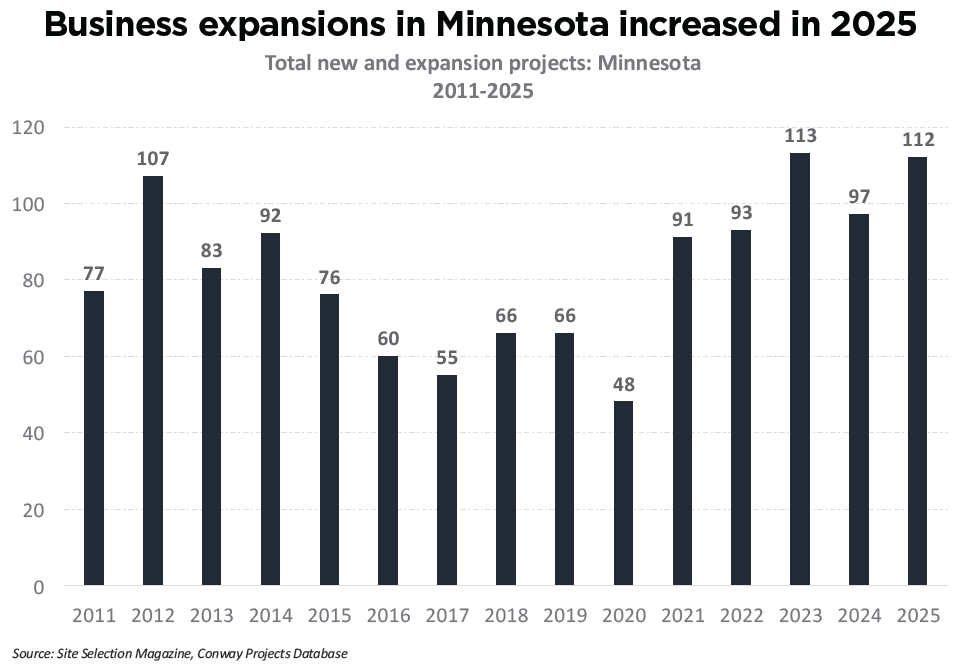
Minnesota continued to generate a steady stream of business expansion projects in 2025, building on elevated levels of publicly announced investment activity since 2021. Site Selection Magazine – which tracks business investment projects nationally through its Conway Projects Database – recorded 112 Minnesota projects in 2025 that met its minimum threshold of at least $1 million in capital investment, creation of 20 or more jobs or at least 20,000 square feet of new construction. DEED similarly tracked 123 business expansion announcements in 2025, representing more than $3 billion in expected capital investment and 2,231 new jobs in the coming years.
Recent expansions span a diverse mix of mature and emerging industries, including industrial machinery, medical technologies and health care, research and development, data centers and semiconductor manufacturing, aerospace, clean technology, and food and agricultural products. These investments reflect Minnesota’s competitive strengths and its base of innovative companies across a broad range of industries.
However, these individual successes are occurring alongside broader headwinds, particularly in the high-wage and advanced industries that play an outsized role in the state’s economic competitiveness. Since 2019, Minnesota has lost nearly 5,000 jobs across broad industry sectors that pay above-average annual wages. Employment in these industries declined by an average of 0.1% annually in Minnesota, while the same industries grew by 0.8% annually nationwide. This divergence suggests that Minnesota is losing ground in some of the sectors that contribute disproportionately to innovation, incomes and economic competitiveness.
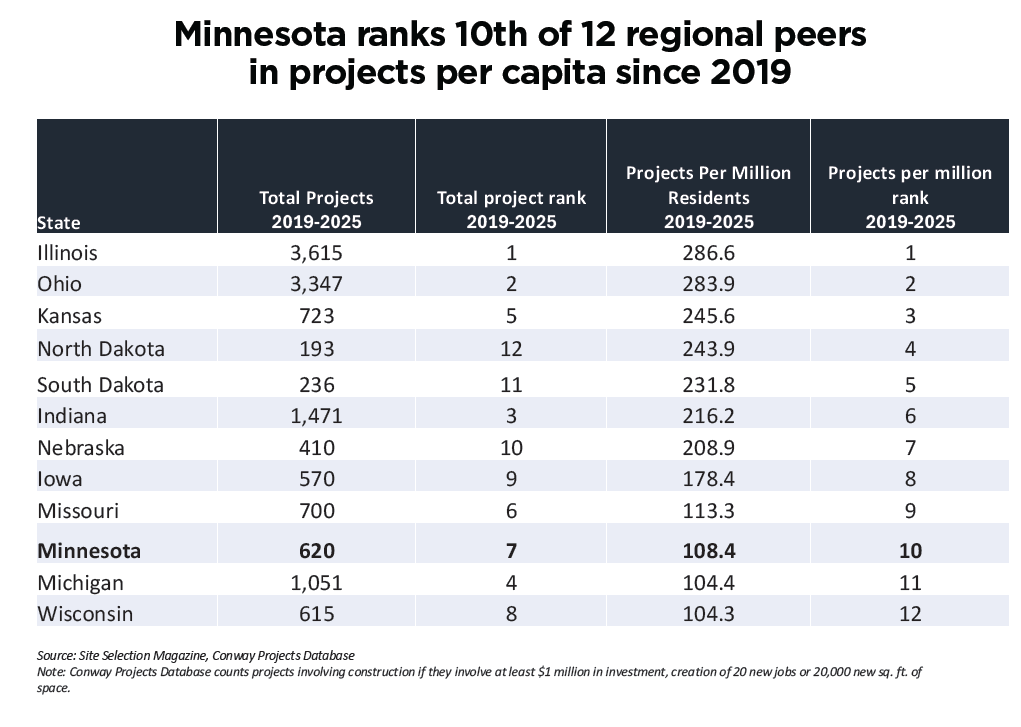
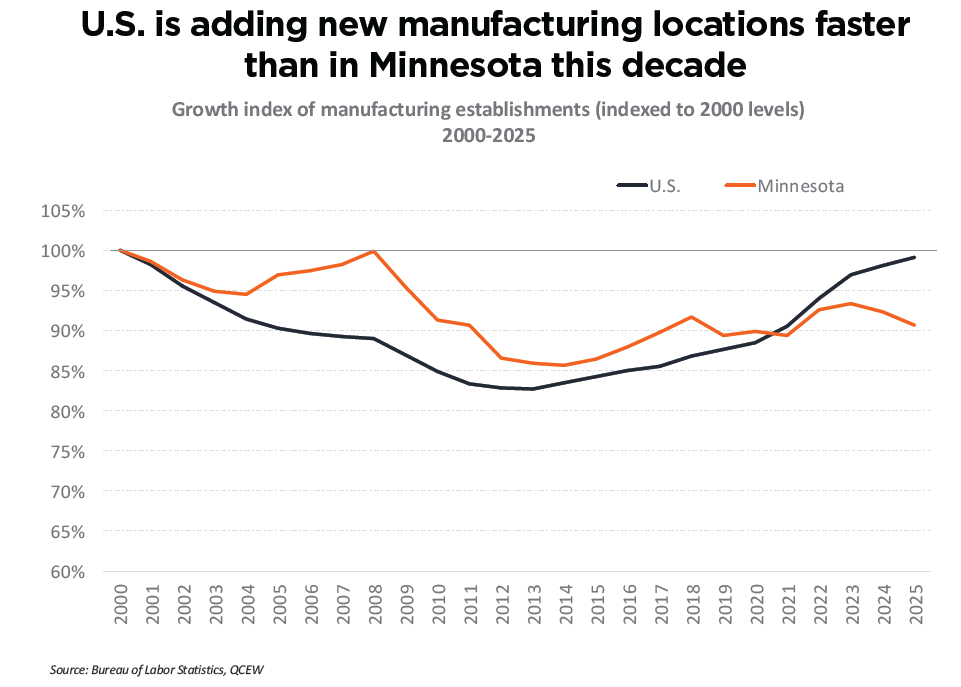
Other indicators point to a similar challenge. While Minnesota continues to attract significant business investments, peer states are generating higher rates of qualifying expansion projects. Minnesota ranked 10th among 12 Midwestern states in site selection projects per million residents from 2019 to 2025, with the same ranking in 2025. Bureau of Labor Statistics’ data also show that the number of manufacturing establishments in Minnesota declined in both 2024 and 2025, even as manufacturing establishments continued to grow nationally. Better understanding the factors behind these differences could help Minnesota build on areas of momentum while addressing weaknesses in critical sectors.
Finally, this report examines the role of workforce development in helping businesses access and develop the skilled workers needed to grow and expand in Minnesota. A Grow Minnesota! survey and in-depth employer interviews reveal a diverse range of strategies businesses are using to train, upskill and retain employees. Employers report meaningful successes as well as persistent challenges, and identify opportunities for state and local workforce programs to better support employer-led training and skill development.
Strengths
Business expansion activity remains elevated. More than 100 publicly announced expansion projects were recorded in Minnesota in 2025, continuing the post-2020 rise in project activity.
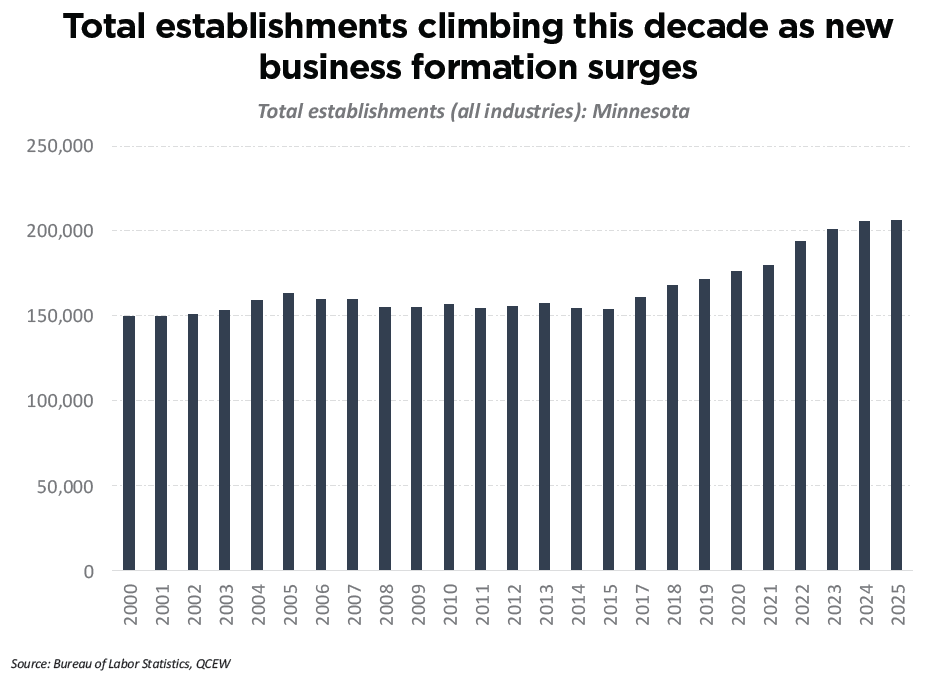
Minnesota continues to add business establishments. The state added more than 34,500 net new establishments from 2019 to 2025, reflecting a combination of new business formation and existing firms adding locations. Establishment growth slowed in 2025 but remained modestly positive.
Several advanced industries are experiencing notable investment and job growth. Minnesota has seen positive momentum in industries including aerospace, pharmaceutical and medical goods, industrial machinery, data centers and semiconductor manufacturing, R&D and digital technologies. These represent areas of strength across both mature and emerging industries that could be further leveraged.
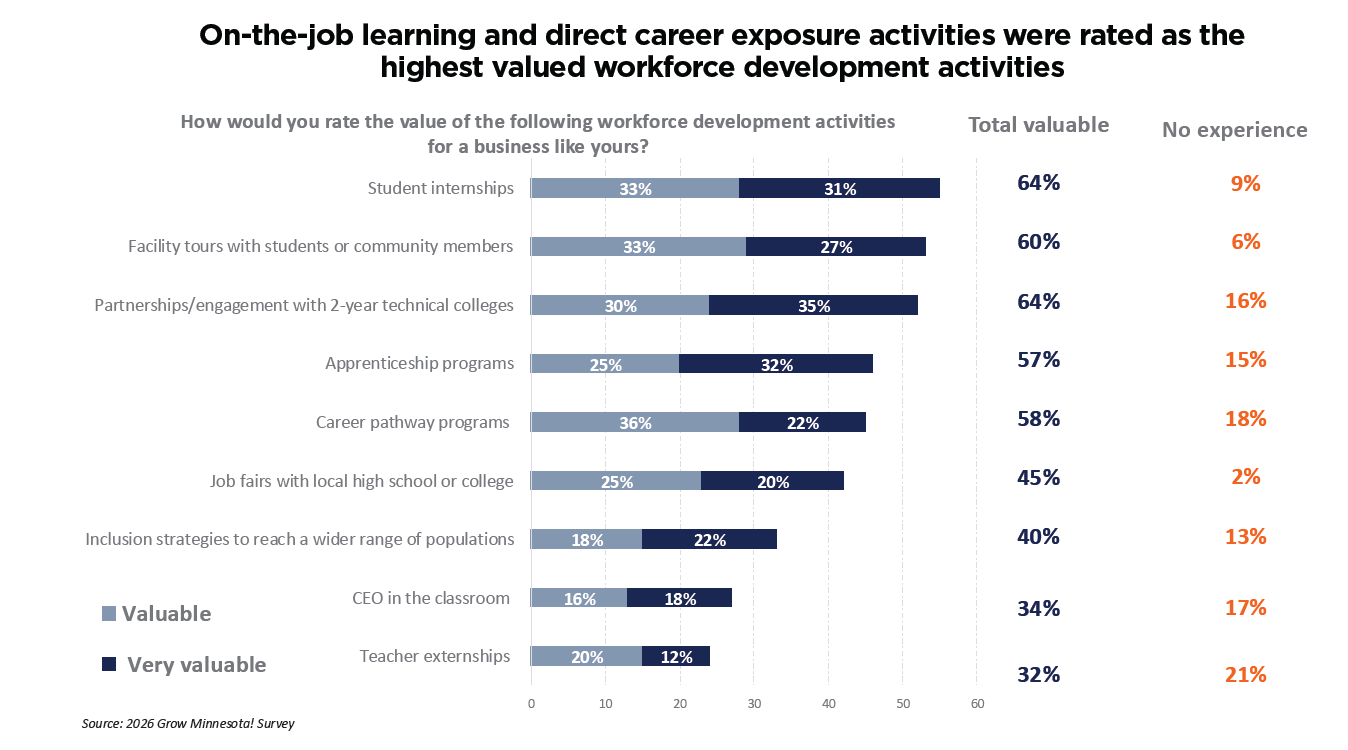
Employers are investing in workforce training and upskilling. Businesses surveyed by Grow Minnesota! reported using a wide range of strategies to build employee skills and create pathways for advancement. Employers rated internships, apprenticeships and partnerships with community and technical colleges among the most valuable workforce development strategies.
Challenges
Minnesota continues to trail regional peers in business expansion project activity. The state ranked 10th among 12 Midwestern states in Site Selection projects per million residents from 2019 to 2025, with the same ranking in 2025.
Manufacturing establishment growth has weakened. The number of manufacturing establishments in Minnesota declined in both 2024 and 2025, while manufacturing establishments continued to grow nationally.
Employment has declined in Minnesota’s above-average-wage industries. These industries lost nearly 5,000 jobs from 2019 to 2025, while industries with below-average wages added 48,000 jobs. Job losses in high-wage industries accelerated in 2025, with employment in this sector declining by nearly 10,000 over the year.
Employment losses have been particularly significant in tradeable industries where businesses face greater competitive pressure with other states. Economic development activities and incentives typically target tradeable industries (i.e. industries where goods and services can be sold beyond the immediate region in which they are produced and where firms have greater ability to move operations elsewhere). Jobs in these industries declined
Back to top
Report methodology
Unlike other areas of economic measurement – such as unemployment or GDP – there is no singular source of data on business expansion activity for regions or states. Businesses are not required to publicly report on decisions to expand or invest in new activities. However, a variety of third-party entities collect expansion data through public announcements in news outlets or company websites, real estate and construction reports, economic development agencies and other sources to track and assess business investments.
This report uses several sources to piece together information on business expansion activity in Minnesota. While not a perfect science, it provides useful insights about a critical component of regional and state economic performance.
Note: The terms “business expansions,” “projects” and “business investments” used throughout this report refer to activities that typically include a combination of job creation and capital expenditures (e.g., real estate, equipment and machinery, etc.) to increase the productive capacity of the business. Focus is given toward tradable industries that aren’t locationally bound to one particular community or region, and thus could potentially relocate or expand across regional or state boundaries.
Sources used in this report:
- Site Selection Magazine/Conway Projects Database: Site Selection Magazine uses a proprietary database called Conway Projects Database to track new and expansion projects throughout the United States. Its annual Governor’s Cup awards measure and rank activity across all states. Their report tracks projects with “a minimum investment of $1 million, creation of 20 or more new jobs or 20,000 square feet or more of new construction.”
- Department of Employment and Economic Development (DEED), Publicly Announced Business Expansions dashboard: Each quarter, DEED updates an interactive online dashboard showing summary statistics and individual project information on expansion announcements throughout the state. As they note on their website, the list is not comprehensive of every expansion in the state. However, it includes valuable information on many impactful business expansion projects in Minnesota.
- Bureau of Labor Statistics (BLS), Quarterly Census of Employment and Wages: This report uses the Bureau of Labor Statistics’ Quarterly Census of Employment and Wages (QCEW) to analyze employment and establishment trends in Minnesota. The analysis focuses particularly on industries commonly prioritized in state and regional economic development efforts because of their contributions to wages, innovation, tax revenues and economic activity across other industries. Minnesota’s performance is compared with trends in other states and nationally.
- Brookings Institution, America’s Advanced Industries: This report uses the advanced industries framework developed by the Brookings Institution in its 2015 report, America’s Advanced Industries: What They Are, Where They Are, and Why They Matter. The analysis identified 50 industries at the four-digit NAICS level – 35 manufacturing, three energy and 12 service industries – based on their concentrations of R&D activity and STEM workers. Collectively, these industries account for a disproportionate share of U.S. innovation, exports and other measures of economic activity. This report uses a slightly modified version of the Brookings typology to account for subsequent changes in NAICS classifications and the limited availability of consistent state-level data for some detailed industries over the period analyzed. The analysis also includes Management of Companies and Enterprises because of its importance to Minnesota and its similar characteristics in wages, productivity, R&D and high-skilled employment.
- Grow Minnesota! survey and interviews of Minnesota businesses: Grow Minnesota! conducted an online survey of 129 Minnesota businesses to gather insights on employer needs, challenges and priorities related to workforce training and upskilling. The non-scientific survey was distributed by the Minnesota Chamber of Commerce and local Grow Minnesota! partners across the state.
The survey targeted manufacturers and businesses that have participated in the Minnesota Job Skills Partnership or Dual Training Pipeline programs. Manufacturers accounted for 46% of respondents, followed by construction firms at 11%, with the remaining respondents representing 14 other industries at the two-digit NAICS level. Responses came from businesses in 43 counties, with the largest share located in the seven-county Twin Cities metro.
Because the survey did not use a random or representative sampling methodology, results should be interpreted as directional insights from participating employers rather than as representative of all Minnesota businesses.
In addition to the survey, the Minnesota Chamber Foundation’s Grow Minnesota! team conducted in-depth interviews with more than 20 businesses and workforce development professionals to gather additional insights on employer training and upskilling strategies and state programs that support these activities.
Back to top
2025 business expansion activity
Total project activity as reported by Site Selection Magazine and business growth trends as reported through establishment data from the Bureau of Labor Statistics.
Key questions: How many new and expansion projects are occurring in Minnesota over time? How does this compare to other states in the Midwest and around the U.S.?
Business expansion activity in Minnesota continues its post-2020 rise, but trails project volume among regional peers in the Midwest. In 2025, Site Selection Magazine recorded 112 new and expansion projects in Minnesota that met its baseline criteria for inclusion in the Governor’s Cup rankings – defined as at least $1 million in capital investment, the creation of 20 or more jobs or at least 20,000 square feet of new construction.
This reflects a continued rise in expansion activity since 2020. Site Selection recorded 506 eligible projects in Minnesota from 2021 through 2025, compared with 295 projects during the prior fiveyear period from 2016 through 2020. While these figures do not represent a comprehensive tally of all business expansions in the state - and are limited by the availability of public announcements from private-sector businesses - they provide a useful directional measure of investment activity in Minnesota and allow for comparisons with other states.
Those comparisons show that Minnesota continues to trail many of its Midwestern peers. In 2025, Minnesota ranked 8th among 12 Midwestern states in total project count and 10th in projects per million residents, according to Site Selection’s Conway Projects Database. This pattern has persisted over time: from 2019 through 2025, Minnesota ranked 7th in the Midwest in total projects and 10th in projects per million residents.
The number of business establishments is rising in Minnesota, but manufacturing establishments have declined since 2023. Assessing growth in the number of business establishments provides another lens into overall business formation and expansion trends. Unlike firm counts, establishment counts measure individual business locations, so growth can reflect both the creation of new firms and existing firms opening additional locations. This provides a useful measure of state-level trends in business formation and expansion, including the addition of new locations by existing firms or firms entering the state.
Data from the Bureau of Labor Statistics (BLS) Quarterly Census of Employment and Wages show that Minnesota added a net 34,511 business establishments from 2019 to 2025. Growth slowed in 2025 but remained positive, with the state adding nearly 300 establishments.
While these data do not distinguish between startup firms and existing businesses adding new locations, data from the U.S. Census Bureau suggest that startup activity has contributed to the recent increase. New business applications – an early indicator of potential business formation – surged beginning in mid-2020 and have remained well above pre-2020 levels.
This rise in new ventures has mixed implications for Minnesota’s economy. New startup firms contribute to job creation, innovation and economic dynamism. However, young firms are typically much smaller than established businesses and may contribute less in the near term to overall employment and capital investment. The extent to which these businesses are able to scale and grow will help determine their longer-term contribution to Minnesota’s economic growth.
Growth has also varied considerably across industries. BLS data show that most of Minnesota’s establishment growth this decade has occurred in service industries, including information, professional services and health care. Goods-producing industries such as manufacturing have experienced relatively little establishment growth. Minnesota added a net 170 manufacturing establishments from 2019 to 2025, but the number of manufacturing establishments has declined year-over-year since 2023.
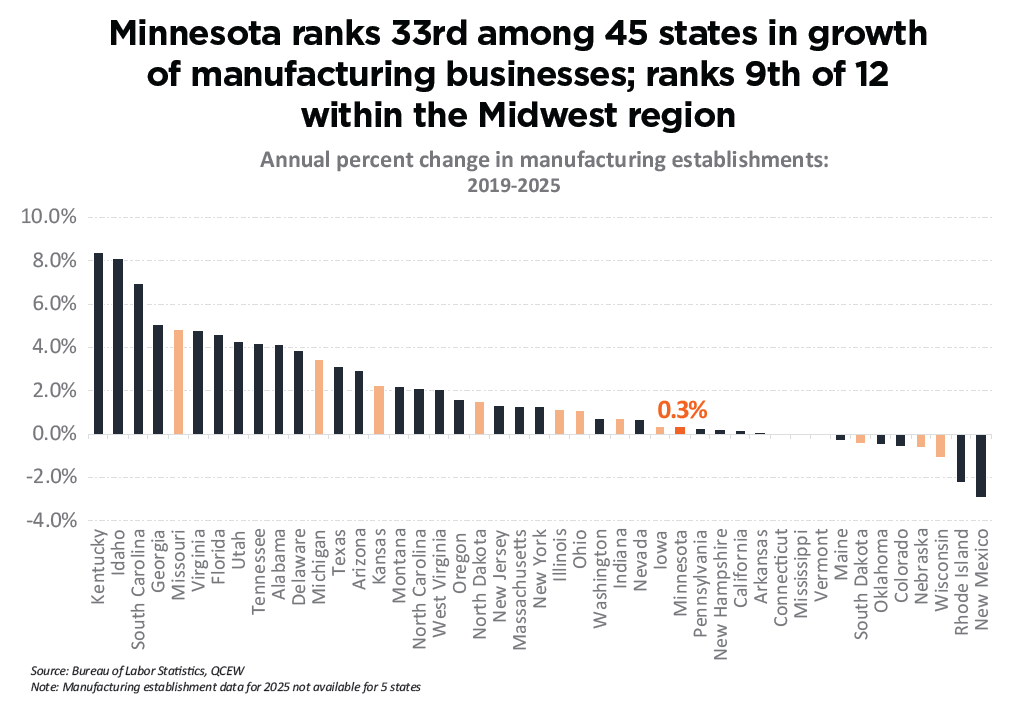
By comparison, manufacturing establishments grew more rapidly across the U.S. economy over this period. Minnesota ranked 33rd among the 45 states with available data for manufacturing establishment growth from 2019 to 2025, placing 9th among the 12 Midwestern states.
Back to top
Public announcements of expansions in 2024
Business expansion projects in Minnesota as reported by the Department of Employment and Economic Development’s directory of publicly announced business expansions.
Key questions: What were the largest expansion projects in Minnesota in 2024? How were projects distributed across regions and industries?
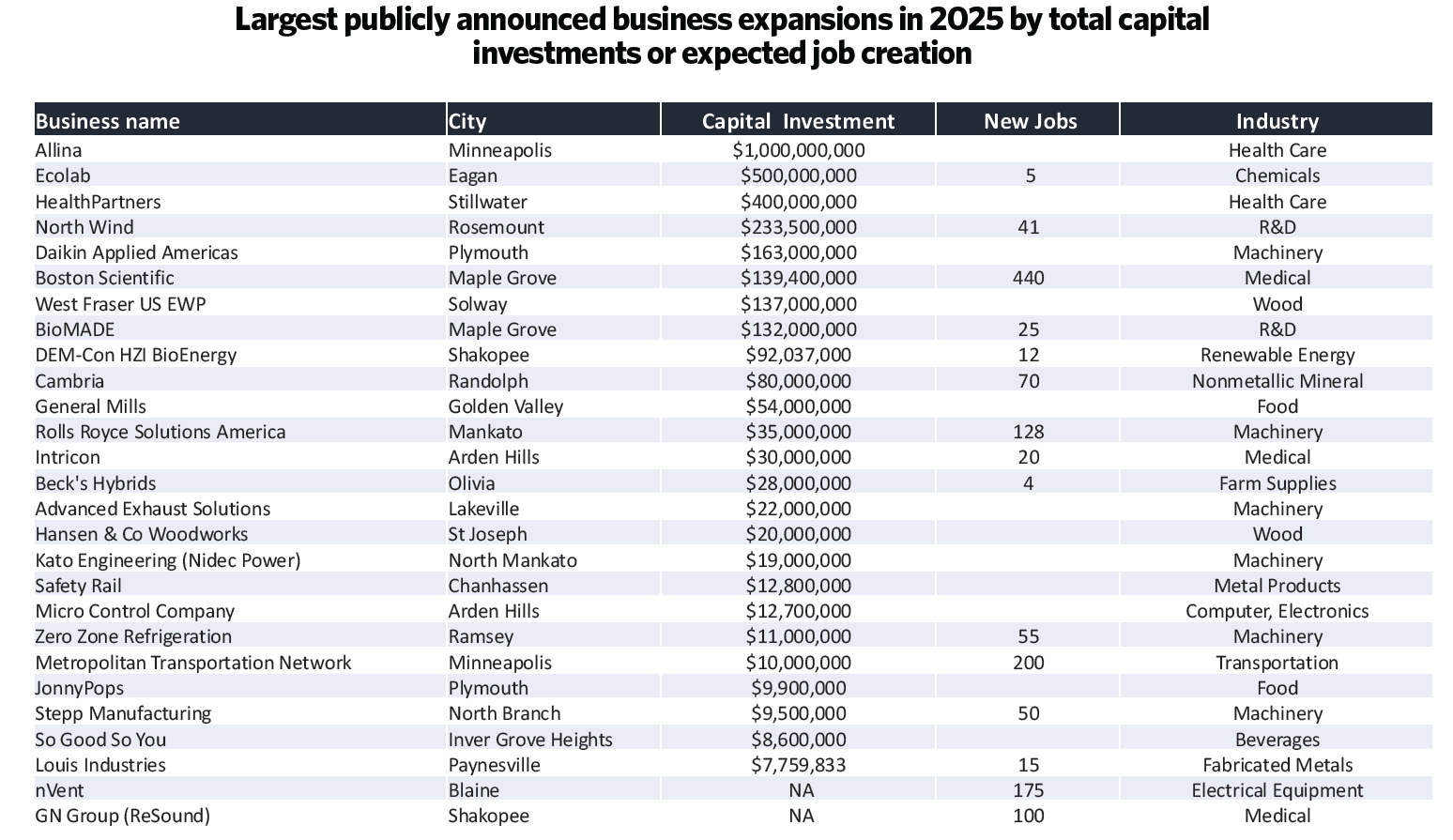
Of 123 publicly announced business expansions, eight projects plan to exceed $100 million in capital investment. DEED recorded 123 publicly announced business expansion projects in 2025, totaling $3.2 billion in expected capital investment and 2,231 new jobs. Two of the three largest projects came from health care providers Allina and HealthPartners, which announced major investments in hospital and clinic facilities in the Twin Cities metro.
Other major investments spanned a range of manufacturing and R&D-related projects:
- Ecolab announced plans to invest $500 million in its Minnesota facilities, including expansions to its R&D activities and construction of a new customer experience center.
- North Wind Test LLC, a Minnesota-based company, advanced plans to invest $234 million in new aerospace R&D and testing facilities in Rosemount, including hypersonic ground-test facilities.
- Daikin Applied moved forward with construction of an R&D test laboratory at its Twin Cities location, with plans to invest $163 million to pursue innovations in cooling technologies for data centers and other commercial applications.
- Boston Scientific continued its recent investments in Minnesota, advancing plans to invest more than $139 million in new and expanded facilities that could create up to 440 jobs by 2030.
- West Fraser, a wood products company, plans to invest $137 million in renovations and new capital equipment at its Solway, Minnesota facility.
- nVent Electric announced a major expansion in Blaine that could create up to 175 jobs as the company expands its production of liquid cooling solutions for data center facilities.
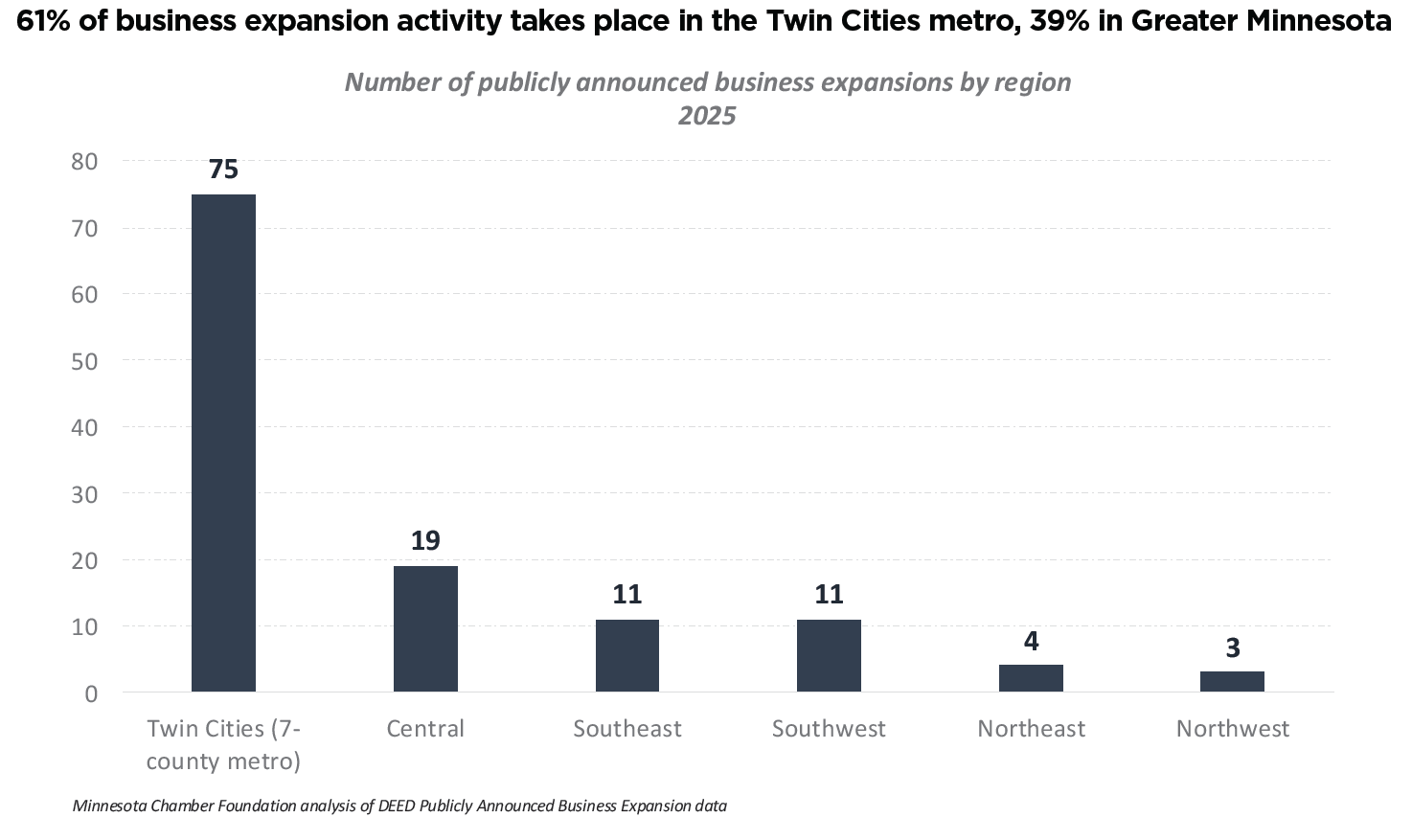
Business expansion projects are taking place across Minnesota’s regional economies, with 61% occurring in the Twin Cities metro and 39% in Greater Minnesota. Similar to 2024, business expansion announcements were concentrated in the seven-county Twin Cities region, which accounted for 75 of 123 projects (61%). Greater Minnesota accounted for the remaining 39% of project activity, a distribution that generally reflects the geographic distribution of employment across the state.
Southwest Minnesota saw an increase in project activity in 2025, driven by several expansions in the greater Mankato area, including notable investments from Rolls-Royce Solutions America, Kato Engineering and Volk Transfer.
The Twin Cities’ northern suburbs also saw a high concentration of activity, accounting for 20 expansion announcements. Maple Grove and Plymouth led the area with five projects each. This continues a pattern from recent years, with a significant share of Minnesota’s business expansion activity occurring in suburban Twin Cities communities.
Machinery manufacturing, food and agricultural products and medical goods drove business expansion activity in 2025. Businesses across a diverse range of industries announced new investments in 2025, with projects spanning more than 40 industries. However, the largest share of projects was concentrated in three industry segments: machinery manufacturing, food and agricultural products and medical goods. This continues a pattern from recent years, with machinery and medical-related industries accounting for a relatively high share of expansion activity. Other industries, including health care services, data centers and energy, accounted for fewer project announcements but included several large-scale investments that contributed significantly to total planned capital expenditures.
Back to top
Growth trends in high-wage advanced sectors
Job growth in sectors with above-average wages, innovation levels and export intensity, using data from the Bureau of Labor Statistics Quarterly Census of Employment and Wages.
Key questions: Is Minnesota creating jobs in high-wage, advanced industries key to the state’s economic development? How does job growth in these industries locally compare to national trends this decade?
A strong economy requires growth and employment opportunities across a broad range of industries. However, certain industries have a disproportionate impact on the economic development of a region or state. These industries are often characterized by above-average wages, high levels of R&D and innovation, and the ability to sell goods and services to markets beyond the regions in which they are produced. Economic development organizations often prioritize investment and job creation in these industries because of their contributions to local incomes, tax revenues and economic activity across other industries.
This section assesses employment trends in high-value industries, comparing Minnesota’s performance with other states and national trends since 2019. The analysis uses two primary approaches:
- Job growth in above-average-wage industries at the two-digit NAICS level: This approach measures employment changes across broad industry sectors, distinguishing between industries with average annual wages above and below the average for all private-sector industries.
- Brookings Institution’s “Advanced Industries” definition: The second approach uses a slightly adapted version of the Brookings Institution’s “advanced industries” typology. Brookings identified 50 industries at the four-digit NAICS level that collectively account for 60% of U.S. exports, more than 80% of patents and nearly 90% of private-sector R&D spending. These industries are also characterized by high wages and productivity and employ a disproportionate share of STEM workers.
For this analysis, the Brookings definition is modified slightly to exclude industries for which consistent state-level employment data are not available throughout the 2019–2025 period. The analysis also adds “Management of Companies and Enterprises,” which includes corporate headquarters and similar operations. This industry plays an important role in Minnesota’s economy and shares many characteristics with other advanced industries, including high wages, R&D activity, productivity and concentrations of STEM workers.
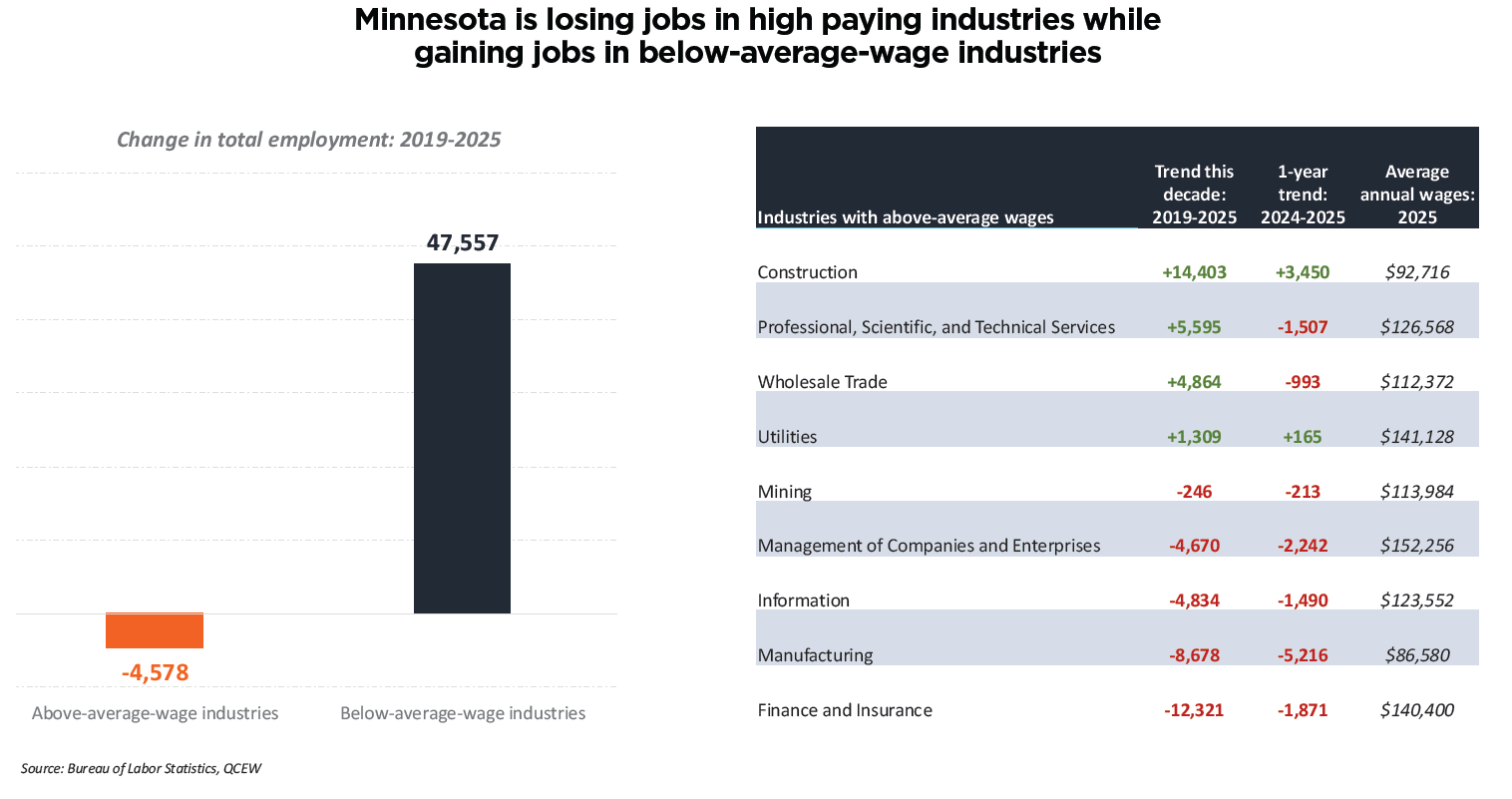
Minnesota has lost employment in industries with above-average wages since 2019, with job losses accelerating in 2025. A concerning trend in Minnesota’s economy this decade is the decline in employment among high-wage industries. Since 2019, employment declined in five of the nine broad industries with above-average annual wages. Between 2024 and 2025, employment fell in all but construction and utilities. Declining performance is particularly evident in tradeable sectors where companies have greater ability to move operations beyond the state and still serve their customers.
In other words, these industries face greater competitiveness pressures with other states and regions. Jobs in these industries – which include manufacturing, wholesale trade, professional services, management of companies and enterprises, information and finance and insurance – lost over 20,000 jobs since 2019 and 13,319 in 2025 alone.
Taken together, Minnesota’s above-average-wage industries lost nearly 5,000 jobs from 2019 to 2025, while industries with below-average wages added 47,557 jobs. As a result, employment growth this decade has increasingly been concentrated in lower-wage sectors of the economy. If this trend persists, it could have implications for future income and wage growth in Minnesota.
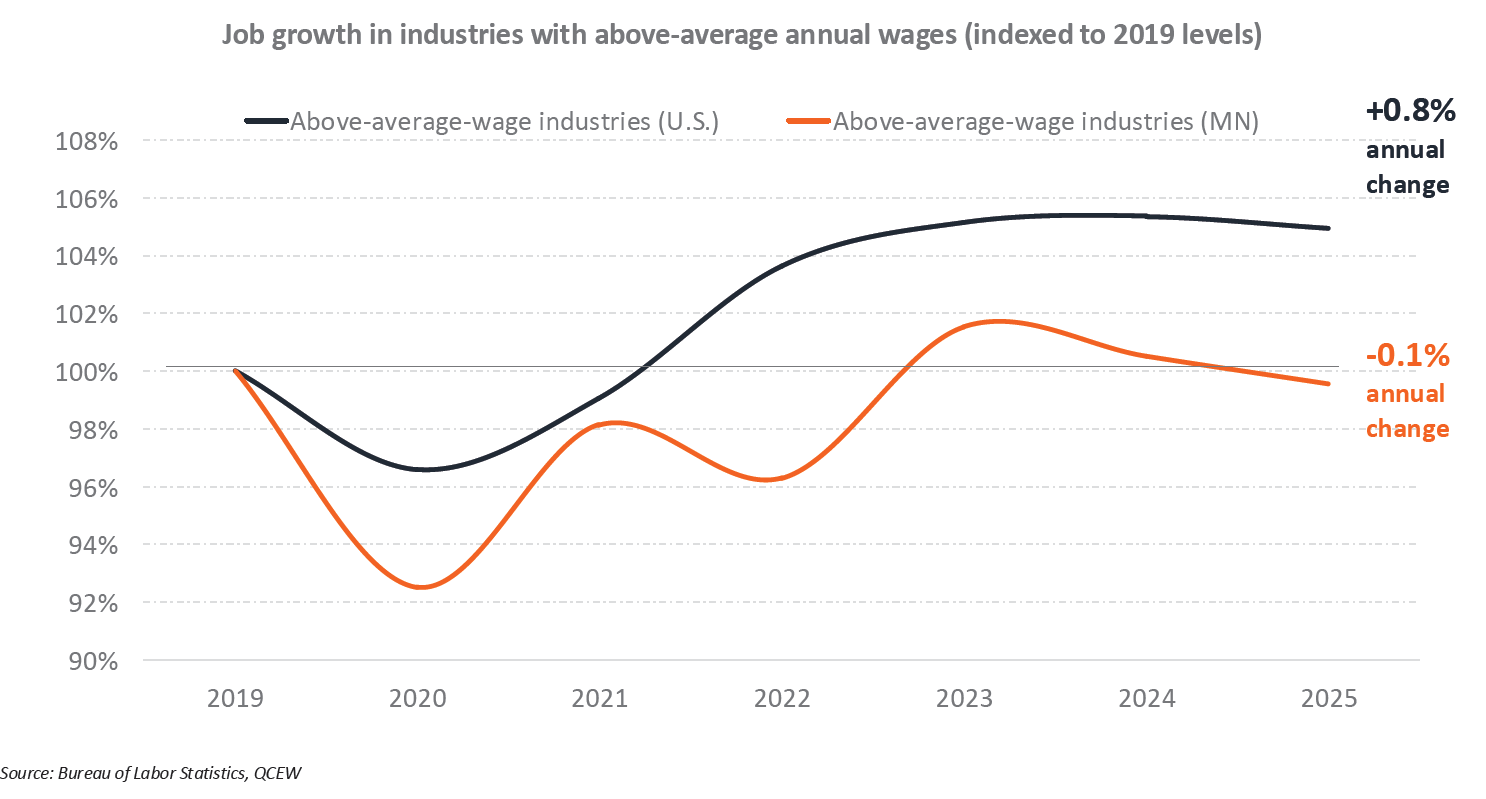
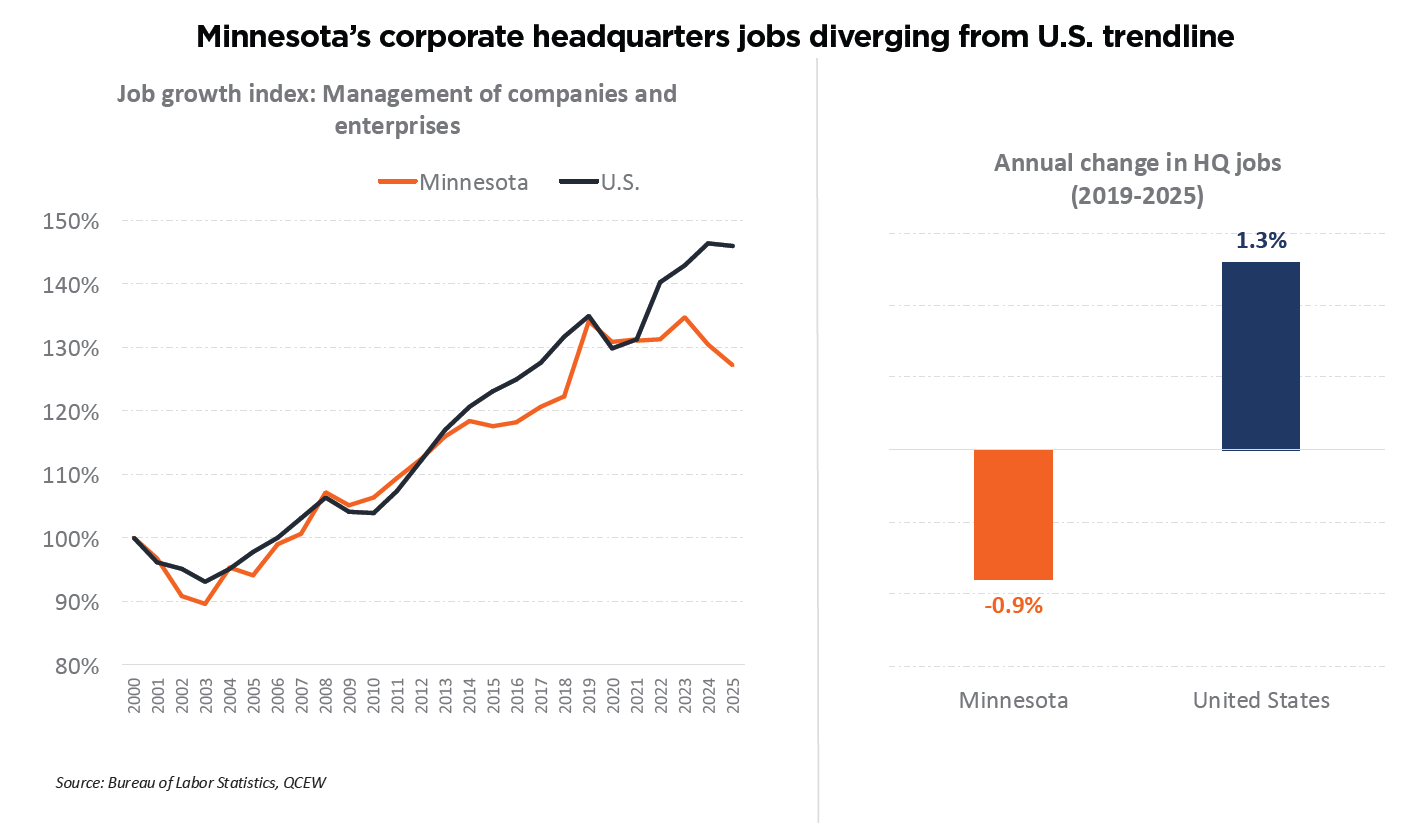
Minnesota’s performance in high-wage industries also substantially trailed national trends. Employment in Minnesota’s high-wage industries declined by an average of 0.1% annually from 2019 to 2025, compared with 0.8% annual growth in the same industries nationally. This divergence was particularly pronounced in the Management of Companies and Enterprises sector, which includes regional and corporate headquarters offices. Minnesota employment in this industry declined by an average of 0.9% annually, while employment nationally grew by 1.3% annually over the same period.
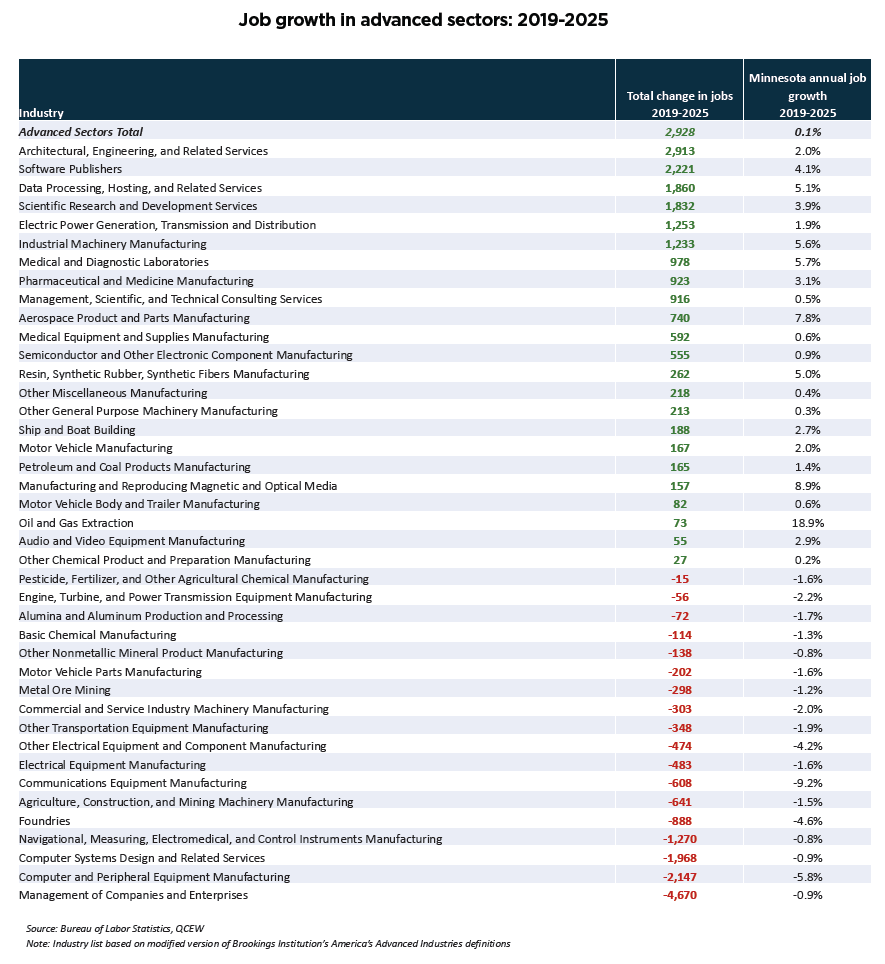
Despite overall job losses in high-wage sectors, Minnesota continued to add jobs in several advanced industries, aligning with recent business expansion trends. Using a modified version of the Brookings Institution’s typology of 50 “advanced industries,” characterized by high wages, R&D, export intensity, productivity and concentrations of STEM workers, provides a more nuanced picture of where Minnesota is adding and losing jobs in high-value industries.
The analysis shows mixed outcomes for Minnesota since 2019, with the state adding jobs in 24 of the 42 advanced industries for which consistent state-level data were available from 2019 to 2025. Job growth was strongest in four advanced service industries – architecture and engineering, software publishing, data processing and hosting, and scientific research and development – which collectively added 8,826 jobs since 2019. Growth was not limited to service industries, however. Several advanced energy and manufacturing industries also added jobs, including electric power generation and transmission, industrial machinery, pharmaceutical and medical goods, aerospace products and semiconductor manufacturing.
Job growth in these industries aligns with recent patterns in business investment and expansion activity. Among publicly announced business expansions tracked by DEED, machinery manufacturing and medical goods accounted for the largest number of announced projects. Minnesota has also attracted major investments in recent years in semiconductor fabrication, data centers, aerospace and clean energy projects. These projects are expected to support high-wage employment while generating significant capital investment, expanding the tax base and creating economic activity throughout local supply chains. Together, these trends highlight areas of positive momentum in Minnesota’s economy that could be reinforced and leveraged in the coming years.
At the same time, Minnesota could further assess the factors contributing to stagnant or declining employment in other advanced industries. Additional research could help explain job losses in industries such as management of companies and enterprises – including corporate headquarters – computer and peripheral equipment manufacturing, computer systems design and electromedical device manufacturing. Do these declines reflect short-term headwinds or longer-term shifts in industry employment? Are there state- or region-specific barriers affecting the competitiveness of these industries? How can Minnesota improve performance in areas of weakness while building on positive momentum in industries that are growing?
Answering these questions could help Minnesota better understand and support the diverse advanced industries that contribute disproportionately to the state’s economic competitiveness.
Back to top
ISSUE SPOTLIGHT: Employer insights on workforce
training and upskilling strategies
Regions and states around the U.S. are placing increased focus on workforce development strategies to support business growth and expansion. This is the result of multiple trends converging simultaneously: slow labor force growth and low unemployment have reduced workforce availability in communities and states; businesses are investing more in automation and new technologies that require changing skillsets among employees; and workers are prioritizing jobs that offer career development and advancement opportunities. These factors raise important questions regarding what types of strategies can best enhance the skills and capabilities of local workforces. What are businesses doing to train and upskill their employees? How are public workforce development programs and partnerships with local education providers supporting these efforts? What barriers are preventing businesses from fully leveraging existing programs? These are questions that Grow Minnesota! set out to begin exploring in 2026.
The Minnesota Chamber Foundation, together with its local Grow Minnesota! partners, surveyed 129 businesses and conducted in-depth interviews with more than 20 additional employers and workforce development professionals to better understand the successes, challenges and needs they face in training and developing their workforce. Outreach focused on manufacturers and businesses that have utilized state workforce training programs, including the Minnesota Job Skills Partnership, Dual Training Pipeline and others. This section highlights key findings from the survey and employer interviews.
The availability of skilled workers remains a barrier to business growth, even as labor market tightness has eased in Minnesota. Past surveys from the Minnesota Chamber Foundation’s Grow Minnesota! program have consistently found that employers view limited workforce availability as a top barrier to growth and expansion in the state. That challenge persists in 2026, despite a modest rise in unemployment and labor supply returning to pre-2020 levels.
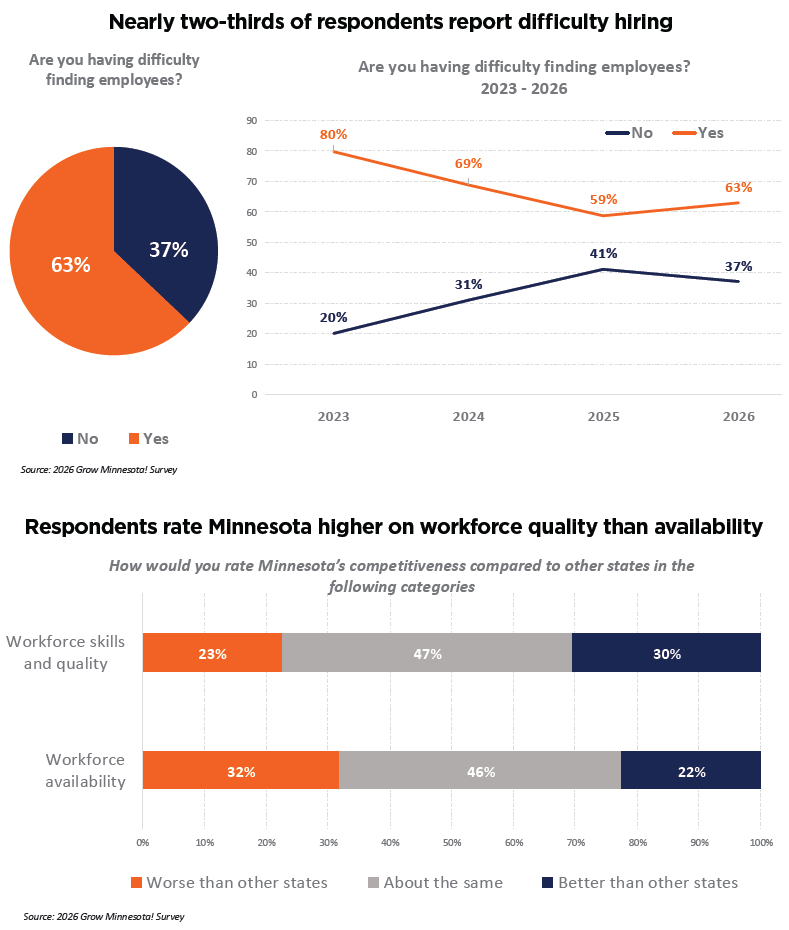
Nearly two-thirds (63%) of respondents reported difficulty finding workers - a slight increase from 2025, though below the record highs reported in 2023 and 2024.
When asked to describe their largest challenges to growth, numerous businesses cited workforce-related issues, including:
- “Cost of labor increases, difficulty finding skilled labor.”
- “Availability of people in the skilled trades, specifically machinists.”
- “The high cost of doing business in Minnesota, along with the stagnant or declining workforce availability.”
- “The availability of a qualified workforce is our #1 strategic challenge. The other states in which we operate have better strategic partnership with business, local employers, high schools, trade schools and universities.”
Employers also expressed concerns about Minnesota’s workforce availability relative to other states. Nearly one-third (32%) rated Minnesota’s workforce availability as worse than other states, compared with 22% who rated it as better.
However, employers viewed the skills and quality of Minnesota’s workforce more favorably. Thirty percent (30%) rated local workforce skills as better than other states, while 23% rated them as worse. This distinction is important: while employers continue to struggle with the number of available workers, they are comparatively more positive about the skills and quality of Minnesota’s workforce.
These findings suggest that workforce quality remains an important competitive asset for Minnesota, but employers continue to face gaps in accessing and developing the specific skills needed to support their operations and future growth. When asked to describe those gaps, businesses identified a wide range of needs - from foundational competencies such as communication and interpersonal skills to technical capabilities related to digital technologies and automation.
Examples included:
- “[We need] programs that combine technical training with soft skills development.”
- “Soft skills – communication.”
- “Digital skill sets and automation skill sets.”
- “Not a skill gap per se, but English as a second language.”
- “Skilled trades and structured problem-solving skills.”
- “Some of the initial skill set regarding construction, tool familiarity and hands-on production has decreased.”
Employer interviews reinforced these survey findings. Several manufacturing leaders described expanding basic manufacturing training for employees who are new to the industry or entering the workforce with limited prior experience. One business, for example, developed a full “intro to manufacturing” curriculum for new employees covering foundational competencies such as the use of power tools and equipment, precise measurement and safety protocols. Other businesses have adjusted their hiring practices to bring in employees with less experience and then provide structured pathways for them to gain additional training and education as they advance into more skilled roles. Employers also emphasized the importance of developing durable, transferable skills among emerging workers, including communication, teamwork, problem-solving and an eagerness to learn.
Businesses are creating structured pathways for employees to build skills and advance into higher-value roles within the company. Many of the success stories shared by business leaders reflected a broader shift in workforce strategy, from simply “filling job roles” to creating structured career pathways that enable employees to gain the training, education and experience needed to advance within the company. Businesses described using a wide range of tools to create these pathways, including apprenticeships, tuition reimbursement, dual training programs, customized training partnerships with local colleges, mentorship programs, internal job boards and formal career-pathway plans that allow employees to move both vertically and laterally within the organization. One business, for example, developed separate advancement pathways for employees interested in supervisory and management positions and for those who want to progress into more advanced technical roles without taking on management responsibilities.
Employers reported that these strategies can help build employee skills while also improving engagement and retention. However, businesses also identified challenges to effectively upskill and retain workers. One employer noted that many employees enter the company with a two-year degree in a manufacturing-related field but stall after a year or two, eventually leaving for another employer or exiting the industry altogether. Another noted that opportunities for advancement into higher-level positions can be constrained by the company’s own growth and the availability of those roles.
Employers also identified training capacity as a common challenge. Effective on-the-job training requires experienced employees who have both the skills and the time to train and mentor less experienced workers. That capacity can be particularly difficult to maintain for small businesses or companies that are already short-staffed. While some businesses employ dedicated trainers, others struggle to devote the personnel, time and resources needed to provide consistent, high-quality training. Some employers shared the added challenge that new labor mandates, such as Earned Sick and Safe Time and Paid Family and Medical Leave, have placed on their staff capacity to engage in training programs.
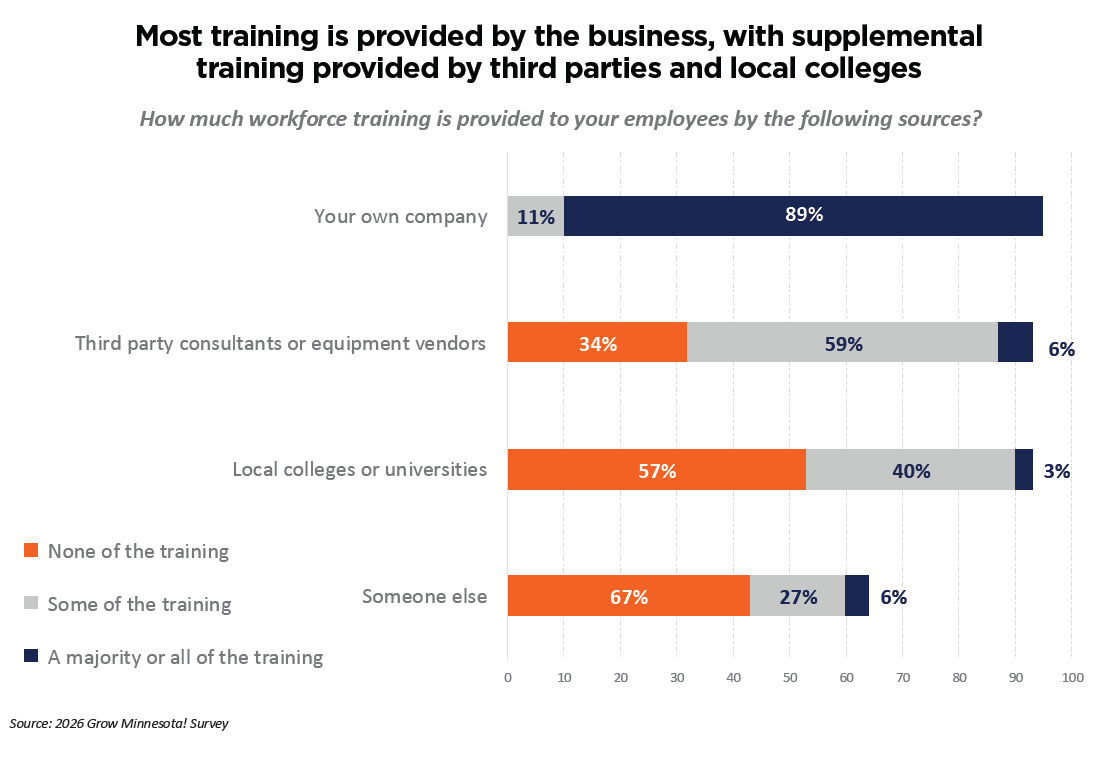
Businesses rely primarily on in-house training, while thirdparty vendors and local colleges provide supplemental training capacity. Survey respondents indicated that internal resources form the backbone of their workforce training efforts. Ninety percent (90%) reported providing the majority of job training in-house. At the same time, businesses frequently supplement their internal training with outside expertise: 60% reported using third-party vendors for at least some training, while 40% utilized trainers from local colleges.
Survey comments illustrate the range of external resources businesses use:
- “Leadership consultants, vendor portals with training modules.”
- “Partnerships with our suppliers/vendors.”
- “M-State leadership skills training.”
- “Safety consultants.”
- “Industry associations.”
- “We use external sources for lean and leadership training, but all job skills training is provided by our own company.”
Employer interviews reinforced the importance of internal training capacity. Several companies reported having dedicated trainers or curriculum developers on staff, allowing them to design and deliver training tailored to their own operations and workforce needs. Employers with dedicated trainers emphasized the value of those positions, while several without them expressed interest in developing similar internal capacity.
These findings suggest an opportunity to better align workforce development programs with the way businesses actually train their employees. Some state training programs, for example, require employers to partner with an outside training provider. While external partners remain valuable sources of expertise and capacity, greater flexibility to support a company’s own trainers, curriculum and internal training infrastructure could help employers expand the training they already provide and make workforce development resources accessible to a broader range of businesses.
Businesses value a range of partnerships with local schools and community partners. While businesses rely heavily on their own internal training efforts, partnerships with local high schools, two-year technical colleges, 4-year universities, industry associations and workforce and economic development organizations are important support mechanisms for companies to access and cultivate a skilled workforce. When asked to rate the value of various workforce development strategies, businesses provided the highest ratings to direct on-the- job learning experiences, such as internships (64%), apprenticeships (57%) partnerships with community and technical colleges (64%). Businesses also valued local initiatives to expose students and community members to career opportunities in their industry. For example, 60% of respondents reported that they value organized facility tours for students, and 58% found career pathways programs at local K-12 schools valuable.
Comments from the survey share what effective strategies and partnerships look like:
- “We’ve partnered with local high schools and technical colleges for careers in welding, machining and fabrication.”
- “Getting to students at the high schools is the best path. It takes one staff member at the high school to be driving the connection so as an employer we need to find our way in and build the partnership.”
- “Internships, apprenticeships and mentorship opportunities are especially effective.”
State training grant programs provide useful support for workforce training and upskilling, but limited awareness, administrative complexity and program flexibility can constrain employer participation.
Minnesota state agencies administer several grant programs designed to help employers expand workforce training and upskilling activities. Survey respondents and businesses interviewed by Grow Minnesota! generally viewed these programs as useful resources, with several employers reporting that training activities would not have occurred without grant support.
At the same time, businesses identified several barriers that can limit participation and reduce the effectiveness of these programs. One is simply a lack of awareness. Depending on the program, between 36% and 66% of surveyed businesses reported being unfamiliar with available state workforce training grants. That level of unfamiliarity is notable because the survey intentionally targeted employers that had previously used training grants or operated in industries likely to benefit from them.
Employers with prior experience using grant programs also identified administrative and flexibility challenges. For example, a company may receive funding to train a specific group of employees, only to have one or more participants leave the company or withdraw from the training during the grant period. In some cases, program requirements can make it difficult for the employer to redirect those resources toward other eligible employees or adjust the training plan as workforce needs change. Businesses also noted that applying for and administering grants can require considerable staff time. That burden can be particularly challenging for smaller employers that lack dedicated human resources, training or grant-management personnel. As a result, some businesses may have difficulty accessing these resources without assistance from an outside organization.
Despite these challenges, employers generally described state training grants as valuable tools for expanding workforce development efforts. Their feedback suggests that increasing awareness, simplifying administration and providing greater flexibility could broaden participation and help more employers take advantage of existing state resources.
Back to top
Conclusions
Minnesota’s business expansion activity reflects both positive momentum and continued challenges. Over the past five years, the state has seen an increase in companies announcing investments in new and expanded operations, including significant projects in life sciences, advanced manufacturing, clean technologies, data infrastructure and semiconductor manufacturing. These investments demonstrate areas of competitive strength that Minnesota can continue to build upon.
At the same time, these successes are occurring alongside broader employment declines in high-wage sectors that play an important role in the state’s economic growth and competitiveness. Since 2019, Minnesota has experienced net job losses in industries with above-average wages, while employment growth has been concentrated in lower-wage sectors. And despite elevated business expansion activity in recent years, Minnesota continues to trail regional peers and national trends on several measures of investment and establishment growth. These patterns warrant further examination of the factors limiting business investment and growth in the state, as well as the conditions contributing to stronger performance in industries where Minnesota is gaining momentum.
One area of opportunity identified through surveys and interviews with Minnesota businesses is employer-led workforce development. Businesses are already investing in a wide range of strategies to train, upskill and advance their employees, but they also face barriers in accessing skilled workers and expanding their training capacity. Strengthening the partnerships, programs and tools that support these employer-led efforts could increase the skills and productivity of Minnesota’s workforce, expand opportunities for workers and help create stronger conditions for businesses to invest and grow in the state.
Back to top

ENGAGE WITH Grow Minnesota!®
Business leaders:
Grow Minnesota! meets with business leaders across the state to learn about their business and connect them with resources to grow and expand in Minnesota. By engaging with Grow Minnesota!, businesses can share critical insights on their challenges and opportunities for growth, inform policy issues and receive one-on-one assistance for business expansions, funding, exporting, workforce development, supplier connections and more.
Local chambers and economic development organizations:
Local chambers of commerce and economic development organizations can partner with Grow Minnesota! to enhance their business retention and expansion efforts and tap into a statewide network of peers. Their engagement is vital in creating a more collaborative and connected ecosystem for attracting and retaining business investment in Minnesota.